Ripple Bob Haircut: The 2026 Guide to Getting It Right
The ripple bob is the haircut I’ve been recommending to almost every client who asks me what to do with their hair in 2026. After nine years as a professional hairdresser before moving into beauty journalism, I’ve seen a lot of trends come and go and this one has genuine staying power.
In this guide I’ll tell you exactly what the ripple bob is, whether it will suit your face shape and hair type, how to ask for it at the salon, and how to style it at home without it looking overdone.
What is the ripple bob?
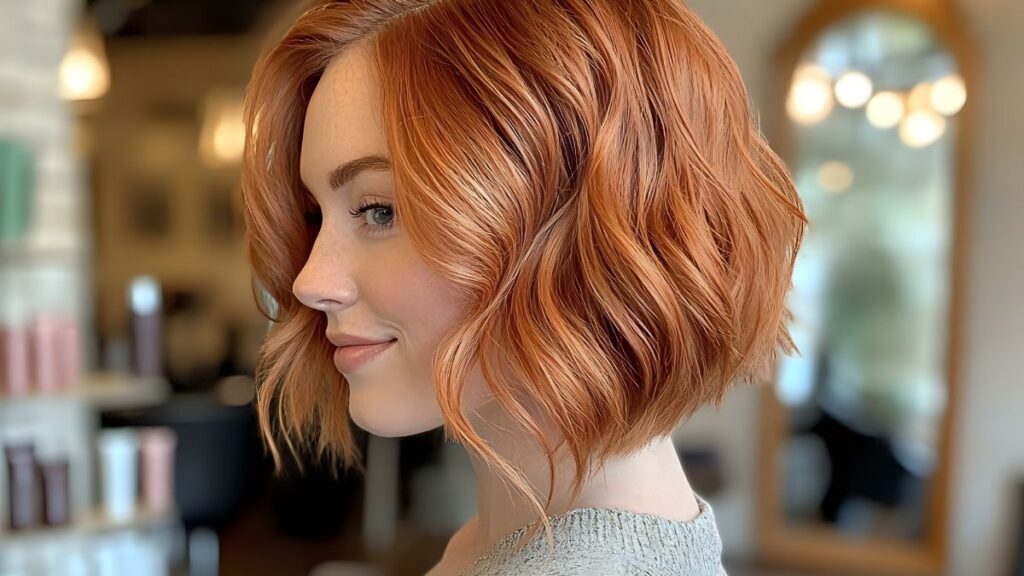
The ripple bob is a chin-to-shoulder length bob cut with soft, wave-like texture built into the shape — either through the cut itself, or through styling. Unlike a blunt bob, which sits flat and structured, the ripple bob has movement and body. Unlike beach waves, which can look undone, the ripple bob looks intentional and polished.
Think of it as the midpoint between a classic bob and effortless texture. It frames the face softly, adds dimension without volume, and works beautifully with natural hair movement.
The name comes from the ripple-like pattern the waves create when the hair falls — gentle, fluid, and relaxed rather than tightly curled or rigidly styled.
Why is the ripple bob so popular in 2026?
There are a few reasons this cut has taken hold and I don’t think it’s going anywhere.
First, it fits perfectly with the current beauty mood. We’ve moved away from high-maintenance blowouts and towards hair that looks healthy, natural, and easy. The ripple bob thrives on that — it actually looks better when it’s slightly undone.
Second, it photographs beautifully. In an era where everyone is thinking about how their hair looks on camera, whether for work calls or social media, a cut with soft movement and dimension photographs far more interestingly than a flat, blunt bob.
Third, it works for almost everyone. Fine hair, thick hair, naturally wavy hair, straight hair — the ripple bob adapts. The technique changes depending on your hair type, but the result is always that softly textured, effortlessly chic finish.
Does the ripple bob suit my face shape?
This is the question I get asked most, so let me be direct.
Oval face shapes — you can wear any length of ripple bob. Chin-length, collarbone-length, either works.
Round face shapes — go for a slightly longer ripple bob that hits just below the jaw. Avoid a bob that ends at the widest point of your face. The waves should fall away from the face rather than towards it to elongate rather than widen.
Square face shapes — the soft texture of the ripple bob is excellent for you. It takes the edge off a strong jawline. A side parting rather than a centre parting makes a significant difference.
Heart face shapes — a collarbone-length ripple bob is ideal. It balances a wider forehead by adding width at the bottom.
Long face shapes — chin-length works beautifully to add width and balance.
How to ask for the ripple bob at the salon
This is where people go wrong. Don’t just say “I want a ripple bob” — your stylist may interpret that differently to how you’re picturing it.
Instead, say this:
“I’d like a bob cut between my chin and collarbone with soft layering through the ends to create movement and texture. I want it to have a slightly undone, wavy finish — not sharp or blunt. I’ll be styling it with a wand or by scrunching product into damp hair.”
Bring a reference photo. The most-searched ripple bob references right now feature Hailey Bieber’s soft wavy bob, Alexa Chung’s undone texture, and Lucy Boynton’s polished-but-effortless finish. Any of these are a useful starting point for your stylist.
Ask specifically about whether they’ll add internal layers — this is what creates the movement. Without layers, the waves tend to drop out quickly on most hair types.

How to style the ripple bob at home
Having spent years behind the chair, this is the part I care most about getting right for you. A beautiful cut is pointless if you can’t recreate it at home.
The tools you need:
- A 25mm or 32mm barrel wand (not a straightener, not a tight curling iron)
- A light-hold texturising spray or sea salt spray
- A fine-tooth comb or a Tangle Teezer for smoothing
- A light-hold flexible hairspray for finishing
The technique:
Start with hair that’s about 80% dry — not soaking wet, not fully dry. This is the key most people miss. Styling on completely dry hair creates more defined, less natural-looking waves.
Work in sections roughly the width of the barrel. Wrap each section around the wand — crucially, alternate the direction with each section. One wrapping towards your face, the next away from your face. This is what creates the ripple effect rather than uniform curls.
Hold each section for eight to ten seconds only. The ripple bob should look like natural movement, not a blow-dry wave set — less time on the heat means a softer, more relaxed result.
Once you’ve waved the whole head, don’t touch it for five minutes. Let the waves cool and set in their shape. Then — and this is the important bit — run your fingers through gently to break them up slightly. Finish with a light mist of texturising spray.
For a heat-free version: Apply a sea salt spray or texturising mousse to damp hair, scrunch, then braid the whole head loosely into two plaits. Sleep on it or leave for two hours. Undo the braids, shake through with fingers, mist with a light hold spray.
Products I recommend:
- GHD Soft Curl Wand for even heat distribution
- Living Proof Texturising Spray for the undone finish
- Oribe Dry Texturising Spray for extra body on fine hair

What hair type works best for the ripple bob?
Fine hair: The ripple bob is excellent for fine hair because the layering and texture create the illusion of volume and thickness. Ask your stylist for internal layers and a light texture through the ends — avoid anything too heavy. Use a volumising spray at the roots before styling.
Thick hair: Thick hair holds the ripple bob shape beautifully and the waves tend to last longer. Your stylist may recommend slightly more internal layering to remove bulk and help the waves form cleanly.
Naturally wavy hair: This is arguably the ideal hair type for the ripple bob. Your natural texture does most of the work. Focus on a good cut with layers that work with your wave pattern, then use a curl-enhancing cream or sea salt spray to define the waves.
Straight hair: You’ll need a wand to create the wave pattern, but the result is worth it. The key is using the alternating direction technique and not touching the waves while they cool.
Colour-treated or highlighted hair: Ripple bobs look incredible on highlighted hair because the movement catches the light and shows off dimension. Make sure your hair is in good condition before cutting — damaged ends won’t hold waves as well.
How often does the ripple bob need cutting?
Every eight to ten weeks to maintain the shape. The good news is that unlike very blunt bobs, the ripple bob grows out gracefully. As it grows, it simply becomes a slightly longer, softer version of itself rather than looking shapeless.
If you’re trying to grow your hair and are using the ripple bob as a transitional style, it works beautifully as a collarbone-length cut that you maintain at the ends rather than the length.
The ripple bob vs other bob styles — which is right for you?
Ripple bob vs French bob: The French bob is shorter (cheekbone to chin), blunter, and more structured. The ripple bob is longer, softer, and more relaxed. French bob suits women who want a sharper, more directional look. Ripple bob suits women who want effortless and wearable.
Ripple bob vs micro bob: The micro bob sits above the jaw and has no movement — it’s a precise, statement cut. The ripple bob is softer, longer, and significantly lower maintenance.
Ripple bob vs blunt bob: A blunt bob has no layers and a sharp, clean line. It looks polished but requires regular maintenance to keep the line crisp. The ripple bob is more forgiving as it grows out and requires less styling effort day to day.

Frequently asked questions
How long does my hair need to be to get a ripple bob? Ideally your hair should be at least chin-length before cutting. If you’re transitioning from longer hair, a ripple bob is actually one of the most flattering intermediate lengths.
Is the ripple bob high maintenance? No — it’s one of the lower-maintenance bob styles available. The texture actually hides second and third-day hair brilliantly. On days you don’t want to style it, a light scrunch of sea salt spray and air-drying gives a perfectly acceptable result.
Can I get a ripple bob with a fringe? Yes. A curtain fringe works particularly well with the ripple bob and is one of the most requested combinations right now. A full fringe also works but requires more upkeep.
Will the ripple bob suit me if I have a lot of frizz? Frizz and the ripple bob can work together if managed well. Use a smoothing serum on damp hair before styling, and finish with a light hold serum or oil on the dry hair to control flyaways. The textured nature of the ripple bob is actually forgiving of a little frizz — it reads as texture rather than untidiness.
What’s the difference between a ripple bob and a wavy bob? Functionally, very little. The ripple bob is a specific styling approach that emphasises the wave pattern and the fluid, ripple-like movement. A wavy bob is a broader term. The key distinguishing feature of the ripple bob is that alternating wave direction that creates the distinct ripple pattern.
The Chic Style Collective verdict
The ripple bob earns its place as one of the best haircuts of 2026 because it solves the eternal problem: looking polished without trying too hard. It suits almost every face shape, works with most hair types, and improves rather than suffers as it grows out.
If you’re considering a change, this is the cut I’d recommend without hesitation — especially if you’ve been tempted by a bob before but worried about it being too sharp or structured. The ripple bob is the soft, effortless, genuinely wearable version.
Book a consultation before committing to the cut, bring your reference photos, and make sure your stylist understands the layering technique. The rest, as they say, takes care of itself.
Want more articles like this? Sign up to the Chic Style Collective newsletter for exclusive editor’s picks, capsule wardrobe guides, and seasonal style tips straight to your inbox.

![The mushroom bob [Adobe]](https://www.chicstylecollective.com/wp-content/uploads/2025/05/CSC-Featured-image-1124-365x274.jpg "Chic Style Collective | The Mushroom Bob: The Bouncy, Chic Haircut Stylish Women Are Choosing in 2025")
![Italian Bob Hair [Adobe]](https://www.chicstylecollective.com/wp-content/uploads/2025/05/CSC-Featured-image-1137-365x274.jpg "Chic Style Collective | What is the Italian Bob Haircut? The Effortless Hairstyle You Need this Fall 2025")