![Brunette Hair Colours: 6 Trending Shades for Summer [Image: CSC]](https://www.chicstylecollective.com/wp-content/uploads/2026/07/Chic-Style-Collective-Hero-Image-1200-x-675-px-52-960x650.webp "Chic Style Collective | 6 Brunette Hair Colours Trending This Summer According to The Experts")
Brunette Hair Colours: 6 Trending Shades for Summer
Brunette is having its most interesting moment in years. After a long period dominated by balayage, lived-in blonde, and the kind of heavily foiled colour that requires significant maintenance commitment, the conversation in colouring chairs across the UK and US has shifted back to brown — but a version of brown that bears very little resemblance to the flat, one-dimensional colour it was once associated with.
The brunette hair trends this summer are specific, considered, and — this matters — significantly more wearable than the blonde alternatives for the majority of women considering a colour change. As a former hairstylist, I’ve watched this shift build over the past eighteen months and it is, in my view, one of the most genuinely flattering things to have happened to hair colour in recent memory. Here are the six shades worth knowing about — what they are, who they suit, and what to ask for at your next appointment.
1. Molten Brunette
Molten brunette is the shade that generated the most conversation on colouring floors this spring, and the reason is immediately visible in any reference photograph: it produces a depth and luminosity that flat brown simply doesn’t have. The technique involves placing warm, liquefied-looking tones — amber, copper, and rich caramel — within a dark brown base in a way that catches light and appears almost molten in movement. Hence the name.
The effect is sophisticated rather than statement — this is not a copper or a red, it is a brown that happens to glow. In sunlight, the warmth comes forward. In lower light, the base reads and the colour appears deep and considered. This is the characteristic that makes it work across seasons: it does not belong exclusively to summer in the way that platinum or icy tones do.
Who it suits: Molten brunette is most impactful on medium to dark brown bases with warm or neutral undertones. It works on naturally dark hair as a way of adding dimension without a significant base change. For women who have been wearing flat brunette for years and want something that feels new without being dramatic, this is the correct recommendation.
At the appointment: Ask for molten brunette using a glossing technique over your base — a colour specialist should layer warm amber and caramel tones through the mid-lengths and ends using a melting application rather than traditional highlights. The result should look like warmth emerging from within the hair rather than colour placed on top of it.
2. Teddy Bear Bronde
Bronde — the space between brown and blonde — has been a reliable category for several years, but the teddy bear iteration is the version that has found the most traction in 2026. The name describes the aesthetic precisely: a warm, soft, honey-through-caramel tone that sits in the golden-brown register rather than the cooler, ashier bronde that preceded it. It reads as thoroughly expensive-looking and thoroughly easy to wear.
The teddy bear quality comes specifically from the warmth of the tones used and the softness of the transition between them. Where earlier bronde tended toward contrast — a definite darker root and a lighter mid-length and end — teddy bear bronde blurs all of those transitions until the colour appears entirely seamless. Think of the coat of a golden retriever or a teddy bear: the tone shifts but there is no identifiable line at which one stops and the other begins.
Who it suits: Teddy bear bronde is the ideal recommendation for women with naturally light to medium brown hair who want a summer lightness without going blonde. It also works exceptionally well for women transitioning out of blonde who want to go warmer and darker without losing the light-reflective quality they’re used to. Warm and neutral skin undertones both suit it; very cool undertones may find the warmth of the palette slightly challenging.
At the appointment: Ask specifically for soft balayage using honey, caramel, and warm golden tones, with a melted root. Avoid the word “highlights” — the application and technique are different, and the result should be entirely hand-painted rather than foiled.
3. Cool Matte Brown
Cool matte brown is the anti-warm shade on this list — the one for the woman who has sat through every warm-toned trend of the past three years and remained entirely unconvinced. It is a deep, flat, almost editorial brown with no warmth in the base, no dimension in the conventional sense, and a deliberate matte finish that makes it look considered and European in a way that glossy or warm browns don’t.
The appeal is the same appeal as a camel coat worn simply: the confidence of restraint. Cool matte brown is the hair colour equivalent of choosing not to add anything further. It requires good skin, strong brows, and the kind of face that doesn’t need warmth added at the hairline to read well. When those conditions are met, it is one of the most striking things a brunette can do with their colour.
The practical consideration: cool matte brown is a colour that requires precision in formulation. The wrong base — too warm, too ashy, too flat — tips easily into the muddy, unflattering territory that gave dark brunette a maintenance-heavy reputation. This is not a box dye situation. It is a technical colour that requires a skilled colourist who understands tonal control.
Who it suits: Women with cool undertones, strong facial features, and dark natural bases. Also for women who have over-processed their hair with warm tones and want a clean, editorial reset.
At the appointment: Ask for a cool brunette gloss or toner over your existing base, specifying no warmth and a matte finish. If the base needs adjusting, this should be a two-step process: base correction first, tone second. Do not rush it.
4. Expensive Brunette

Expensive brunette is less a specific tone and more a result — the descriptor used when a brunette hair colour looks like it costs more than it does, and behaves better than it has any reason to. The look is characterised by high shine, seamless dimension, and an absence of any band or line that signals where the colour begins and ends. It reads as natural to the point of looking like the person was simply born this way, which is — as any colourist will tell you — the hardest thing to achieve.
The technique typically involves a combination of a refined base colour, a glossing treatment to maximise shine, and very carefully placed highlights or balayage in tones that are only one to two levels lighter than the base. The subtlety is intentional and the result is transformative: expensive brunette does not look coloured. It looks like the best possible version of the natural colour.
Glossing is the step that most women are not doing and should be. A toning gloss applied over brunette hair — either in salon or at home with a product like the Davines ALCHEMIC system — adds the reflectivity that makes dark hair look expensive rather than flat. It is available as a standalone treatment at most colouring salons and takes twenty minutes.
Who it suits: Almost everyone with medium to dark brown hair. The technique is adaptable across base shades and undertones because it works with the existing tone rather than against it.
At the appointment: Ask for a refined brunette with a gloss finish. Specify that you want dimension without visible contrast — your colourist should be working within two shades of your base at most.
5. Almost Black
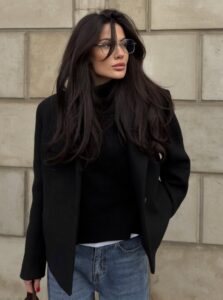
Almost black is the most committed shade on this list and the most directional. It sits at the very deepest end of the brunette spectrum — not quite a true black, which can appear harsh and require significant commitment to maintain and eventually change, but a near-black with just enough softness and depth to retain warmth at the root and a subtle difference from a flat dye.
In 2026, almost black is being worn with a deliberateness that signals confidence in a way that lighter colours don’t require — it frames the face strongly, makes the whites of the eyes appear brighter, and produces a richness in the hair texture that lighter colours thin out. It is the hair colour equivalent of wearing an entirely black outfit: demanding but, on the right person, entirely correct.
Who it suits: Women with dark natural bases returning to depth after a period of lighter colour. Also strong on deeper skin tones where the contrast with the complexion is striking rather than stark. Cool and neutral undertones suit it best; very warm undertones may find the coolness of a near-black slightly competitive.
At the appointment: Ask for a very deep brunette — level 2 or 3 — with a blue-black or natural reflect rather than a warm brown reflect. The distinction in the reflect is what separates almost black from flat black and gives the colour its depth and movement.
6. Brunette with Balayage Highlights
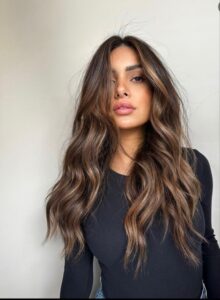
Brunette with balayage is the summer hybrid — the option for the woman who wants dimension and lightness without losing the brunette identity that suits her. Done well, it is the most naturally sun-kissed result available, and done specifically for summer it tends toward the warmer end of the balayage palette: honey, butterscotch, and light caramel placed through the mid-lengths and ends in a way that suggests the sun has been responsible rather than a colourist.
The key difference from traditional highlights is the application: balayage is painted freehand onto the surface of the hair, which produces softer edges and a more natural grow-out than foil highlights. For brunettes specifically, the placement should concentrate colour through the mid-lengths and ends rather than at the root area — a heavy balayage that starts too high reads as grown-out rather than intentional.
For summer specifically, the most wearable instruction is to go lighter through the ends than might feel comfortable at the appointment. Balayage that looks slightly too light on the day looks exactly right when it has been in the sun for three weeks.
Who it suits: Any natural or coloured brunette base. The most universally applicable shade on this list.
At the appointment: Ask for a balayage specifically rather than highlights — and specify the tones. For summer, warm and golden. For a more year-round result, slightly cooler caramel or toffee. Bring three reference images and let your colourist select the technique that achieves the result in the fewest possible stages.
Maintaining Brunette Colour at Home
The investment in any of these six shades is best protected with a colour-specific haircare routine. The two products worth prioritising:
A colour-protecting shampoo and conditioner that preserves the tonal work between appointments — Philip Kingsley’s Colour Protecting range is the professional standard, and the investment in it extends the life of a colour appointment by several weeks.
A toning gloss or at-home gloss treatment used every two to three weeks between salon visits. The Wella gloss step is the single most effective thing a brunette can do at home to maintain the expensive, high-shine quality of a fresh colour.

Frequently Asked Questions
What is the most flattering brunette hair colour for summer 2026? Teddy bear bronde and molten brunette are the most universally flattering options for summer — both use warm, light-reflective tones that work in sunlight and sit well against summer skin. For women who prefer a cooler palette, expensive brunette with a high-gloss finish is the most sophisticated and widely flattering alternative.
What is the difference between bronde and brunette? Brunette describes the range of medium to dark brown hair tones. Bronde sits at the lighter end of that spectrum, blending brown and blonde tones in a seamless transition — it reads as a light brown with golden or honey undertones rather than a defined colour on either side of the spectrum.
How often does brunette hair colour need to be maintained? Most brunette colour appointments last eight to twelve weeks for base colour work. Balayage and gloss treatments can be extended to twelve to sixteen weeks because the grow-out is intentionally seamless rather than contrast-heavy. A toning gloss at home every two to three weeks between appointments maintains the colour quality significantly.
Is almost black hair difficult to maintain? Almost black is one of the lower-maintenance colours on this list — the depth of the shade means root growth is far less visible than on lighter colours, and the colour requires no bleaching to achieve on most natural bases. The main consideration is transitioning away from it in the future, which requires careful planning with a colourist.
What hair care products are best for coloured brunette hair? A colour-protecting shampoo and conditioner, used consistently, is the most important investment. A pre-shampoo treatment such as the Philip Kingsley Elasticizer used weekly maintains the condition of colour-treated hair. A toning gloss used between appointments maintains the tonal quality of the colour. These three steps cover the full routine a coloured brunette needs.
Want more articles like this? Sign up to the Chic Style Collective newsletter for exclusive editor’s picks, capsule wardrobe guides, and seasonal style tips straight to your inbox.


![Hairdryer [Unsplash]](https://www.chicstylecollective.com/wp-content/uploads/2025/03/CSC-Featured-image-971-365x274.jpg "Chic Style Collective | We Tried & Tested The Best Luxury Hairdryers Including Dyson, ghd, Shark and T3")
![Cherub Bob [Adobe]](https://www.chicstylecollective.com/wp-content/uploads/2025/04/CSC-Featured-image-985-365x274.jpg "Chic Style Collective | What is the Cherub Bob, and Is It the New French Bob?")